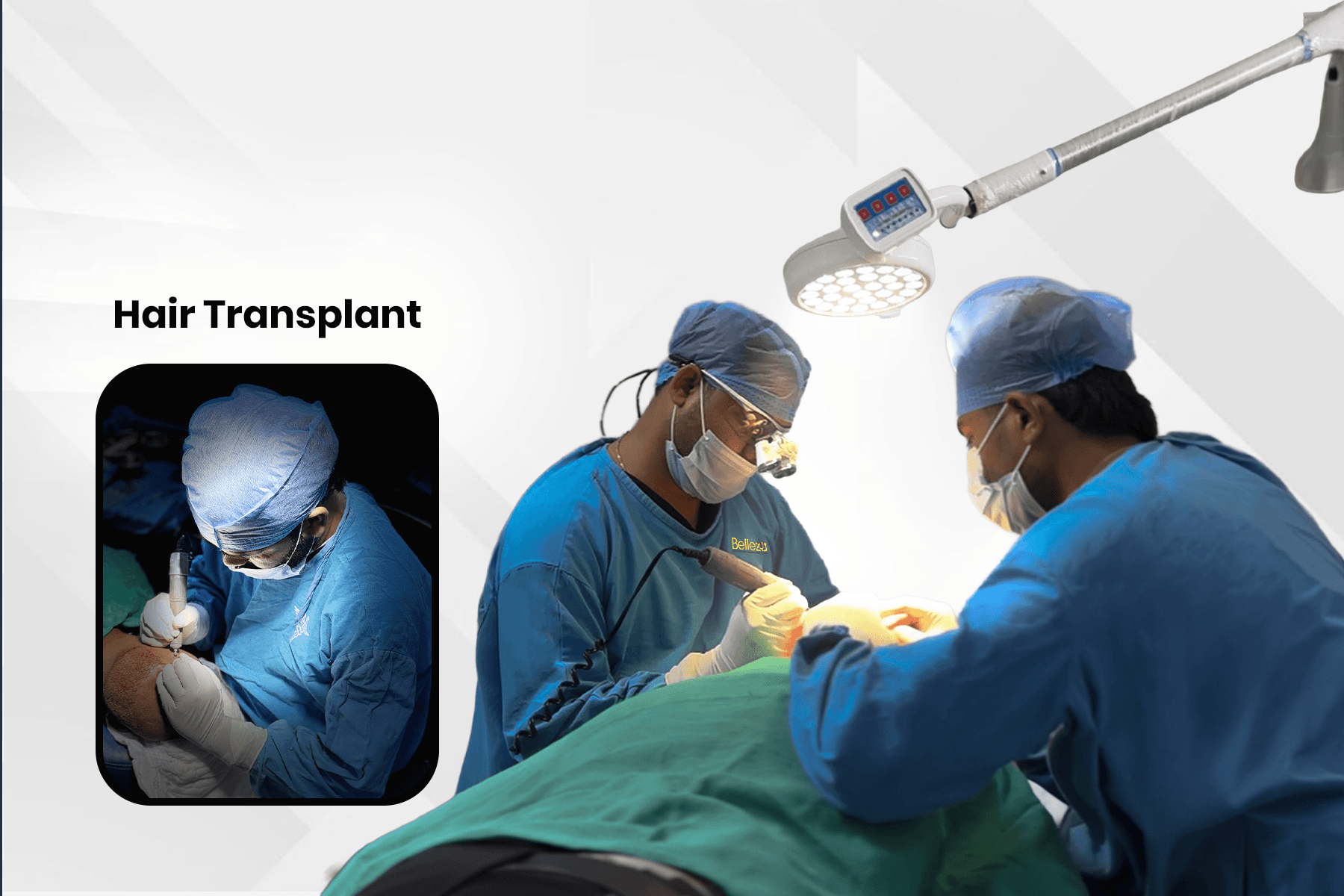
One surgeon-written guide covering Direct Hair Implantation, graft numbers, pricing factors, recovery week by week and the questions to ask before you book.
Direct Hair Implantation (DHI) is a hair restoration technique built on follicular unit extraction. Individual follicular units are removed from a donor area, usually the back of the scalp, and placed directly into areas with hair loss using a hollow implanter pen.
The main difference from conventional FUE is that the surgeon or trained technician does not need to cut recipient channels beforehand. Each graft is loaded into the pen and implanted in one motion, which gives close control over the angle, depth and direction of every hair. The transplanted hairs are permanent in most cases because they come from areas that are genetically less sensitive to the hormone that causes pattern hair loss.
A follicular unit is a natural group of hairs that grow from one opening.
Each follicular unit naturally contains approximately 1–4 hairs.
The implanter pen uses a fine hollow needle, typically 0.6–1.0 mm in diameter, chosen to match the graft size.
Grafts are extracted with micro-punches, then loaded into a pen that places them directly into the scalp.
Donor hair can sometimes be harvested from the beard or other body regions.
Most DHI sessions are done under local anesthesia. Because every graft is implanted one by one, the procedure can take longer than conventional FUE for the same number of grafts, and larger sessions are sometimes split across two days.
Step 1
The surgeon examines your scalp, estimates how much donor hair is available, and designs a hairline that suits your face and your likely future hair loss.
Step 2
The donor area is trimmed short and numbed with local anesthetic. In selected cases the recipient area can be left unshaved or only partly trimmed.
Step 3
Using a micro-punch, the surgeon or device scores around each unit and lifts it out. Each unit is removed one at a time.
Step 4
Each graft is checked, sorted by hair count and loaded into the hollow needle of the implanter pen, keeping it hydrated and protected until placement.
Step 5
The pen places the graft straight into the scalp at the chosen angle, direction and depth. Single-hair units usually go at the front hairline for a softer edge.
Step 6
You receive instructions for washing, sleeping position and activity limits. Small scabs form around each graft and fall off over the following days.
Both methods collect grafts one by one from the donor area and leave no linear scar. They differ mainly in how the grafts are placed in the recipient area.
| DHI | Conventional FUE | |
|---|---|---|
| How grafts are placed | Loaded into an implanter pen and placed directly | Placed with forceps into pre-made recipient channels |
| Control of angle and depth | Set for each graft as it is implanted | Set when the channels are cut, then followed during placement |
| Recipient area shaving | Sometimes not needed, depending on the case | Usually trimmed or shaved in the treated zone |
| Session length | Often longer for the same number of grafts | Often shorter, especially for large sessions |
| Typical suitability | Small to medium sessions, hairline work, density in gaps | Small to very large sessions |
| Cost per graft | Often higher, since it is more labour intensive | Often lower |
Final density depends far more on donor quality, graft survival and surgical skill than on the tool used. Ask your surgeon which method suits your case rather than assuming one is always better.
Hair transplants do not show their final result right away. Transplanted hairs go through a rest phase before they start growing again, so the first months can look worse before they look better. Timing varies from person to person.
Estimate the number of grafts you may need and calculate your potential hair transplant cost based on your hair loss stage and treatment requirements. The final graft count and cost may vary depending on your donor hair density, coverage goals, and the surgeon's assessment.
Top view · face at the bottom
Good candidates usually have stable hair loss, enough healthy donor hair, and realistic expectations. DHI is often considered for hairline design, filling gaps between existing hairs, eyebrow or beard work, and for people who want to avoid shaving the whole recipient area. A surgeon can also assess whether medication should be started first to slow further loss.
Donor hair is a limited supply, and transplanting does not stop hair loss that continues in untreated areas. DHI sessions are often longer and may cover fewer grafts per day than conventional FUE. Possible side effects include swelling, temporary numbness, infection, and uneven growth. Results depend heavily on the experience of the surgical team, so it is worth checking credentials and reviewing before-and-after photos of patients with hair like yours.

Step 1 of 3
Fill Basic Details.
